|
The History of
Hemp
by Derek Bielby
The history of Hemp
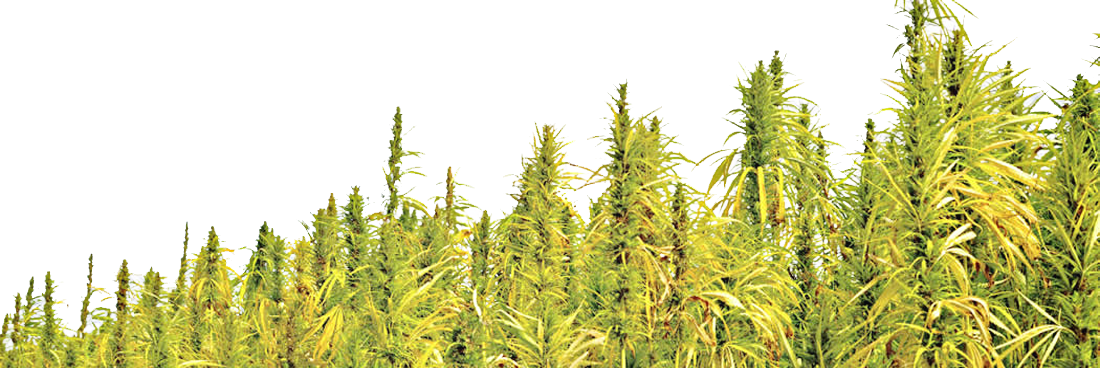
(Cannabis Sativa) provides a fascinating story dating back more than 6,000
years. China has an unbroken history of Hemp textile production dating from
before 4,500 BC with the spread to Asia around 1,000 BC and reaching Europe
around 800 BC.
It became an
important crop of enormous economic and social value supplying much of the
world's need for food and bast fibre. Sailing ships became dependent on
Canvas (from the word cannabis), Hemp rope and oakum due to it being 3 times
stronger than Cotton and rot resistant in salt water. In 1175 Hemp was taxed
and in 1535 Henry VIII passed an act compelling all landowners to sow 1/4 of
an acre, or be fined. During this period Hemp was a major crop and up to the
1920's 80% of clothing was made from Hemp textiles. The biggest decline for
the U.K. fibres came from Cotton and with the advent of the 'Spinning Jenny'
in the 1870's Cotton prices fell dramatically.
A further crisis for
Hemp arose in America during the 1930's due to propaganda created by
companies with vested interest from the new petroleum based synthetic
textile companies and the large and powerful newspaper / lumber barons who
saw Hemp as the biggest threat to their businesses (they created the
confusion between Cannabis Indica (marijuana) and Cannabis Sativa (Hemp).
Traditionally, Hemp
was processed by hand which was very labour intensive and costly, not
lending itself towards modern commercial production. In 1917 American George
W. Schlichten patented a new machine for separating the fibre from the
internal woody core ('Hurds') reducing labour costs by a factor of 100 and
increasing fibre yield by a factor of 60. Mr Schlichten and his machines
disappeared, not surprisingly!
During World War II
the supplies of Hemp from the East were being cut off so American farmers
were encouraged to grow Hemp for military use (webbing, canvas etc.) under
the banner of "Hemp For Victory". After the war, licenses were subsequently
revoked, at a similar time to the last Hemp crops being grown in the U.K.
In 1971 Cannabis
became caught up in the politics of the Opiate laws and became classed as a
restricted plant under the misuse of drugs act.
In the 1990's new
agricultural initiatives were put forward in Europe towards sustainable
alternative crops to alleviate the massive surpluses of food being produced.
Farmers in the U.K. felt disadvantaged and lobbied the Home Office into
harmonizing legislation across the EC. In 1992 / 93 the first licenses were
granted for growing Hemp of the low THC varieties (THC is the narcotic
substance found in the plants leaves) under the ruling that Hemp is grown
for "special purposes" or "in the public interest".
At present,
approximately 2,500 hectares are being grown. To put this into perspective,
in 1992 600,000 hectares of land were put to set-aside. This area of Hemp
would give a yield of over 6 million tons of biomass and 120,000 tons of
fibre. 4 billion pounds worth of tree pulp is imported into the U.K. every
year leaving a trade deficit of £2.3 billion (1992 Figures).
Cotton and Bast
fibres such as Jute and Sisal are all imported. The use of fibre grown on
subsidised U.K. set aside land could easily resolve this trade deficit. Hemp
is now once again, after being demonised through propaganda and prohibition,
set to make a comeback in the light of awareness of our current
non-sustainable future and continued damage to the environment.
Unfortunately in uncertain political times for the Government and the vested
interest of companies that sustain them, visions and benefits are put aside
as to pander to the whims of the status quo and short-term non-sustainable
future. Agenda 21, due to be published in June may show a way forward for
industry and mankind. The future of Hemp is only restricted by an awareness
of it's true potential as the environmental benefits of Hemp are
outstanding.
Hemp is said
historically to have over 25,000 diverse uses ranging from paints, printing
inks, varnishes, paper, bibles, Government documents, bank notes, food,
textiles (the original 'Levi's' jeans were made from Hemp cloth), canvas
(Hemp canvases were used by the great masters) and building materials. With
modern technical developments uses have increased to composite boards, motor
vehicle brake and clutch pads, plastics, fuels, bio-diesel and Eco-solid
fuel. In fact anything that can be made from a hydrocarbon (fossil fuel) can
be made from a carbohydrate (William Hayle, 1930).
The plant is a
prolific and sustainable environmental crop growing at any latitude from
Norway to the Equator. Currently most raw materials are imported from China
and Hungary.
The processes for
extraction of fibres are firstly retting which is the natural breakdown of
the lignin in the bark of the plant to release the fibres, which usually
takes two weeks. After this the plant stem is mechanically broken to extract
the coarse long fibres. These are then scutched to remove the woody core
hurds and other dusts and foreign matters.
The coarse fibres are
then hackled to remove any debris and carded ready for spinning. Fibres can
now be spun to NM 15 count and by blending are suitable for knits. The
physical advantages of Hemp fibre are its strength and ability to withstand
temperatures of 600oc without denigration. The fibres also block more of the
UV rays, an important factor in the changing ozone layer, and are more
insulative than cotton.
Due to the decline of
the textile trade, especially regarding long fibres, the Hemp Union Ltd.
feel the way forward is in using current short fibre spinning technology.
New processing experiments in Europe are now able to produce fibres
comparable with cotton.
The main current
market places that have Hemp awareness are America and Germany, also Spain,
Austria, Switzerland, Australia, Canada, France and Norway. It would appear
that the growth rate of the market place in some of these countries is about
90%. The whole project has to be market led and proactive in creating public
awareness.
If you have been
wondering whether the textiles can be smoked, the answer is No, you can't
smoke your shirt, as you would die of carbon monoxide poisoning. |